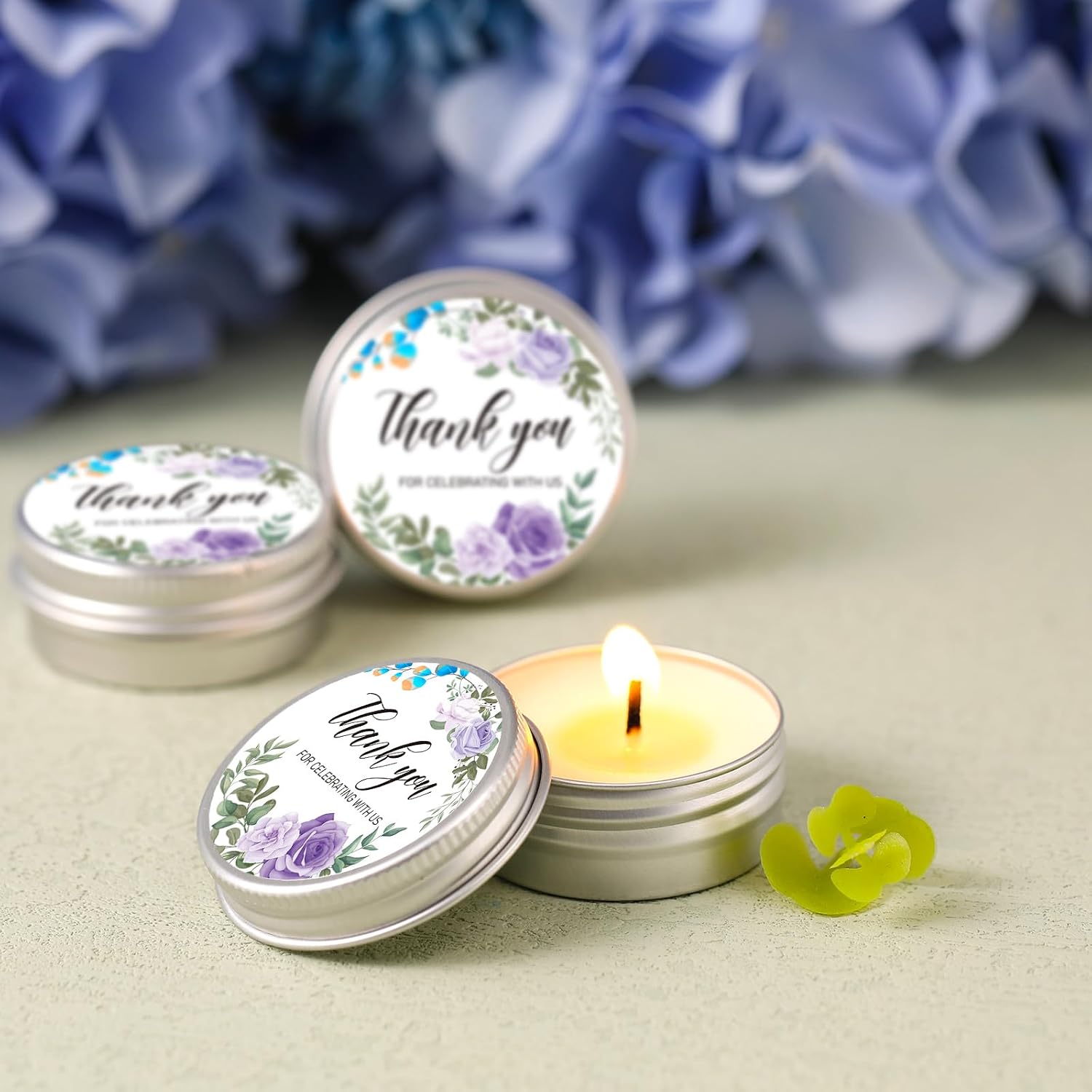
Candle favors — small, pre-poured wax vessels set at each guest’s place or arranged on a favor table — have quietly become one of the most searched and most debated categories in reception gifting. The debate isn’t whether guests like them. They do. The real question hosts and planners wrestle with is: what does a candle favor actually deliver at a given price point, and when does spending more translate into something guests genuinely keep rather than leave on the table?
This guide answers that question with numbers. Whether you’re working a 120-person reception on a $75 favor budget or a 60-guest micro-wedding where $5 per head is on the table, the tiers below will show you exactly what changes — and what doesn’t — as the per-unit cost climbs from $0.60 to $5.00.
Why Per-Guest Cost Is the Right Frame (Not Total Spend)
Before the tier breakdown, a framing note that matters for anyone currently pricing out a contract or negotiating with a vendor.
Total favor budget is a misleading number in isolation. A $900 favor line sounds generous. Divided across 150 guests, it’s $6.00 each — workable for a nice candle. Divided across 300 guests, it’s $3.00 — a different product category entirely. Always anchor your conversation with clients or vendors in per-unit cost, because that’s the number that determines what you’re physically handing someone.
Per the Knot’s annual Real Weddings Study (most recent edition published 2025), the average couple allocates between $300 and $900 on favors total, with per-guest spend clustering most heavily in the $2–$4 range. Candles specifically have ranked in the top three favor categories for three consecutive years in that data set, behind personalized items and food-based favors.
By the numbers:
- $0.60–$1.00/guest → mass wholesale, unscented or lightly scented tea light/votive
- $1.00–$2.50/guest → mid-wholesale, basic fragrance, minimal branding
- $2.50–$4.00/guest → retail-adjacent, recognizable scent, customizable label
- $4.00–$5.00+/guest → artisan or branded, strong scent throw, keepsake-grade vessel
Tier 1: $0.60–$1.00 Per Guest — Volume Wins, Experience Loses
At this price point, you are buying a wax object in a container. That’s the honest frame.
What you typically get: an unscented or lightly scented tea light, a small votive in a clear glass or tin, or a taper candle bundled in kraft paper. Wax is usually paraffin (a petroleum-derived wax that burns cleanly but carries no sustainability credential). Fragrance load — industry term for the percentage of scent oil mixed into wax — is either zero or minimal, typically under 6%. Burn time runs 4–8 hours for a tea light, 10–15 hours for a small votive.
The honest tradeoff: these work as ambient table décor when you’re burning them during the reception itself. As a take-home favor, survivability (the likelihood a guest keeps and uses it after the event) is low. Martha Stewart Weddings has noted in its favor trend coverage that unscented or faintly scented candles rank among the favor categories most frequently left behind at venue.
Where this tier makes sense: Very large guest counts (200+) where the alternative is no favor at all. Ceremonies where candles are part of the tablescape and burn during the event — the favor is secondary to the styling function. Hosts pairing candles with a second, more personal favor element (a seed packet, a handwritten note) where the candle is visual filler rather than the hero item.
Where it doesn’t: Any event where the favor is meant to represent the couple’s taste or the planner’s brand. At $0.60–$1.00, the vessel itself communicates that a budget decision was made. Guests recognize this tier.
Tier 2: $1.00–$2.50 Per Guest — The Credibility Gap
This is the trickiest tier to buy confidently, and it’s where most planning errors happen.
The range spans an enormous quality spread. At $1.00, you’re still in mass wholesale territory — paraffin wax, generic fragrance, stick-on label. At $2.25–$2.50, you start reaching mass-market brands that sell direct to event planners in bulk: think frosted glass votives with a clean sans-serif label and a recognizable single-note fragrance like cedar, white tea, or citrus.
The credibility gap is this: $1.50 looks exactly like $2.50 to a guest. The label design and the scent are what communicate value, not the price. Hosts who invest $1.80/unit in a well-designed custom label on a decent-smelling votive will outperform hosts who spend $2.40 on a higher-quality wax in a forgettable vessel.
Key variables to evaluate at this tier:
- Fragrance load: Ask vendors directly. 8–10% fragrance load is the threshold where guests actually smell the candle when unlit — a meaningful cue to “this is a real candle.” Under 6%, it smells like nothing at room temperature.
- Wax type: Soy or coconut wax (both plant-derived, both cleaner-burning) are increasingly a selling point guests notice and mention. Paraffin is not disqualifying, but it’s a missed opportunity at this price.
- Label customization: Most wholesale suppliers at this tier charge a setup fee ($25–$75) for custom labels, then print from your file. This is almost always worth paying. Brides.com’s favor coverage consistently surfaces customization — particularly monograms and date details — as the single factor most correlated with guests keeping a favor.
Where this tier makes sense: 80–180 guest events where candle is the primary favor. Couples who want a branded, aesthetically coherent favor without moving to artisan pricing. Corporate welcome suites where the candle is one of three or four items — it doesn’t need to carry the whole impression.
Tier 3: $2.50–$4.00 Per Guest — Where Survivability Improves Meaningfully
This is the tier where candle favors stop being décor and start being gifts.
At $2.50–$4.00, you’re buying into recognizable fragrance quality, proper fill weight (typically 3–6 oz), and vessels that guests will reuse. Frosted glass, matte black tin, amber jar — these are containers that live on a windowsill or bathroom shelf after the candle burns down. That reuse-after-use-cycle is the survivability metric that matters most in the favor category.
Fragrance houses that sell event-dedicated product lines — Illume, Paddywax, and comparable wholesale-accessible brands — operate in this range when purchased through event wholesale channels. Note that retail pricing for these brands runs $12–$22 per unit; the per-guest figure cited here reflects bulk event pricing at minimum order quantities (MOQs typically 24–72 units per SKU).
Customization at this tier gets more sophisticated. You can often choose from 4–8 fragrance options rather than accepting whatever the supplier defaults to. Some vendors offer custom fragrance blending at minimum order quantities of 48–100 units — a meaningful differentiator for luxury micro-weddings.
Lead time note: This tier requires the most careful planning. Customized labels with a proof-approval cycle typically need 3–5 weeks. Custom fragrance or vessel selection can push to 6–8 weeks. Per Town & Country Magazine’s coverage of bespoke wedding details, lead time anxiety is the primary reason couples downgrade their favor tier in the final month of planning — they simply run out of runway. Book this tier at contract signing, not 30 days out.
Where this tier makes sense: 40–120 guest weddings where the favor is meant to anchor a scent memory of the event. Design-forward hosts styling a cohesive aesthetic where the candle vessel lives on the table as décor before guests take it home. Corporate gift suites where a $3.50 candle paired with a $4 card and tissue paper creates a $50-feeling package.
Tier 4: $4.00–$5.00+ Per Guest — Artisan and Branded Territory
Above $4.00, you’re no longer competing on value — you’re making a statement about what kind of host you are.
This is where hand-poured candles from independent artisans enter the picture: small-batch makers who pour to order, use single-origin wax (often beeswax or locally sourced soy), hand-label in calligraphy, and offer genuinely custom fragrance development. It’s also where mass-market luxury brands — Voluspa is the most-cited name in this category across planning publications including Martha Stewart Weddings and Brides — can be purchased in event quantities with custom gift messaging.
At $4.50–$5.00, you’re looking at a 4–8 oz vessel with a full-weight pour, burn time in the 30–50 hour range, and fragrance throw (the intensity of scent when the candle is burning) that fills a room. These are candles guests will burn completely. The vessel quality at this tier — thick glass, weighted tin, ceramic — is almost universally reused.
The math case for this tier is strongest when your per-guest gift budget is $8–$15 and the candle is carrying the majority of the spend. If you’re allocating $12/guest total for favors, a $4.50 candle in a beautiful vessel with a custom label and a handwritten card is a coherent, high-impression package. Spreading that same $12 across three cheaper items produces nothing memorable.
Where this tier doesn’t make sense: Guest counts above 150 (the per-unit cost becomes a significant line item fast). Events where sustainability or provenance cannot be verified — hand-poured artisan claims are difficult to validate at scale, and a vendor who can’t answer “where is the wax sourced?” is probably not actually hand-pouring at volume.
The Decision Rule
If you’re currently choosing a tier for an active event, use this frame:
- Guest count over 150 + total favor budget under $300: Tier 1. Burn them at the table. Don’t pretend they’re take-home gifts.
- Guest count 80–150, favor budget $200–$400: Tier 2, but spend the extra $30–$75 on a proper custom label. The label is doing more work than the wax.
- Guest count 40–120, favor budget $300–$600, event has a strong aesthetic identity: Tier 3. Lock the vendor at contract signing; the lead time will kill you otherwise.
- Guest count under 80, favor budget over $400, or corporate/VIP context where the gift needs to represent a brand: Tier 4. The per-unit math works, the impression is proportionate, and survivability is near-certain.
The one consistent finding across The Knot’s favor research, Brides.com’s real-couple surveys, and event planner commentary cited in Town & Country’s wedding coverage: guests remember candle favors most when they can smell them unlit, when the vessel is something they’d buy for themselves, and when there’s a personal detail — a name, a date, a handwritten note — that anchors the object to the event. None of those three things require the top tier. But none of them happen accidentally at the bottom tier either.
Pick the tier your budget supports. Then spend what’s left on the label.