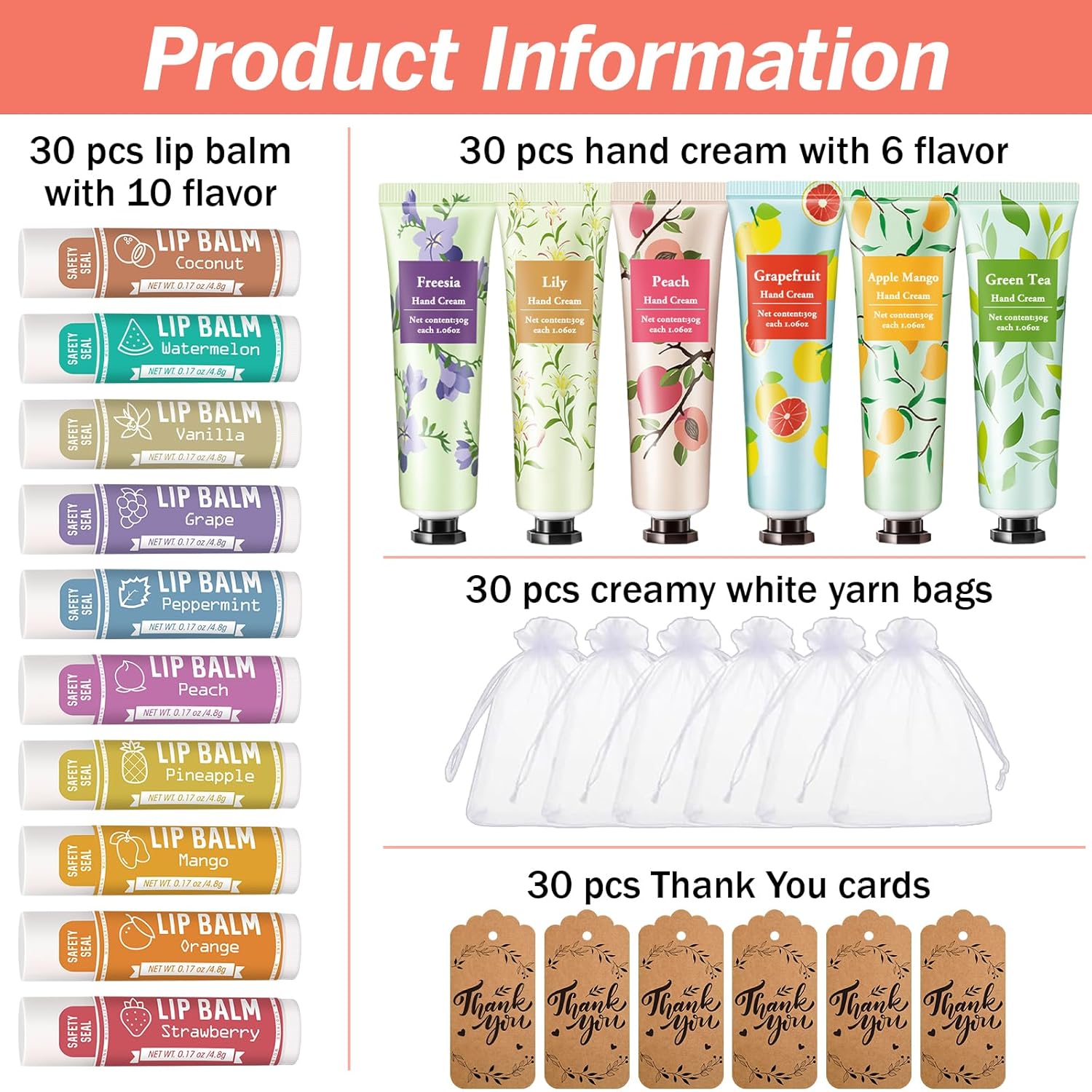
If you’ve ever cleared tables at the end of a reception, you know which favors get left behind: the tulle bags of almonds, the tiny picture frames, the custom cookies that nobody wanted to crush in a handbag. And you know which ones disappear — the ones guests quietly slip into a pocket before the first dance is even over. Hand cream and lip balm favor sets consistently land in that second category. They’re small, genuinely useful products — moisturizing lotion for the hands and a waxy balm to protect lips — that guests reach for the morning after a wedding and, according to aggregated reviewer sentiment across beauty and wedding planning communities, for weeks beyond that. If you’re planning a reception, bridal shower, corporate welcome suite, or any event where you’re spending real money on guest gifts, understanding why this category outperforms and how to buy it well is worth your time. This guide gives you the tier breakdown, the unit economics, and the decision rules to navigate it confidently.
Why Self-Care Favors Keep Rate Outperforms Every Edible and Most Décor
The Knot’s 2025 Real Weddings Study found that useful, everyday-item favors are consistently cited by guests as the type they’re most likely to keep and use — with beauty and personal care items ranking at or near the top of that list. Brides magazine’s editorial coverage of “favors guests actually keep” names hand creams and lip balms repeatedly as category leaders, alongside candles and custom stationery.
The logic is straightforward: these products are consumable but slow-burn. A guest doesn’t use a full-size hand cream in one sitting the way they eat a macaron. It sits on their desk or nightstand and reminds them of your event every time they reach for it. That’s the brand-impression lifespan most favor categories can’t approach.
There are two other structural advantages worth naming explicitly:
Dietary and allergy neutrality. Edible favors — candy, nuts, baked goods — carry the ongoing risk of guests with dietary restrictions setting them aside. Hand cream and lip balm are universally applicable in a way food rarely is. Fragrance sensitivity is a real consideration (more on that below), but it’s navigable; nut allergies are not.
Travel-friendly format. A two-piece set of a 1–2 oz hand cream tube and a 0.15 oz lip balm tube is almost always TSA-compliant for carry-on luggage, which matters for destination weddings and conference gifting. Martha Stewart Weddings’ favor roundups consistently note that guests traveling by air have a practical preference for small, liquid-safe items, and this format fits that brief exactly.
The Tier Breakdown: What You Get at Each Price Point
Entry Tier: $8–$18 per guest
At this level, you’re working with stock SKUs — pre-formulated products sold in bulk, often with a custom label as the primary personalization layer. The most common format is a matched duo: a small squeeze tube of hand cream (often 1 oz) and a standard twist-up lip balm, packaged together in a simple kraft box, organza bag, or clear acetate tube.
What the math looks like: At 100 guests and a $12 per-unit target, you’re at $1,200 before shipping. Most wholesale favor suppliers at this tier require minimum orders of 50–100 units. Custom label setup fees typically run $25–$75 one-time, which is negligible at scale.
The tradeoff you need to name: Formulation quality at this tier is variable. The label is yours; the lotion and balm are the supplier’s stock. If the hand cream goes tacky or the lip balm flavor is artificial, the guest experience doesn’t match the impression you’re trying to make. Wirecutter’s review of hand creams notes that the difference between an elegant-feeling moisturizer and a greasy drugstore formula is often apparent within one use — and at entry tier, you’re buying whatever the bulk supplier formulates. Request samples before committing to quantity. This is non-negotiable.
Fragrance note: For large guest lists where you can’t predict sensitivity levels, fragrance-free or very lightly scented formulas are the safer bet. Some suppliers offer both; ask explicitly.
Mid Tier: $20–$55 per guest
This is the decision-dense zone for most event planners, and where the most interesting brand and format choices live.
At this level, you’re typically working with one of three sourcing models:
-
Named indie brands offering favor programs. A number of well-regarded natural and clean-beauty brands — many with Etsy presences or direct DTC sites — offer minimum-quantity favor sets with custom labeling on their actual retail-grade products. The guest is receiving something they might actually recognize, or at least would choose to buy themselves.
-
Artisan apothecary bundles from Etsy makers. The mid-tier Etsy artisan market for favor sets is robust as of mid-2026. Hand-poured, small-batch formulations with custom label design and matching packaging are a genuine option. Lead times are the key friction point: most makers working at this level quote 3–6 weeks for orders over 50 units, and holiday season (October through February) can push that to 8–10 weeks.
-
Branded retail sets, repackaged or curated. Some planners source from retail brands at this tier — buying individual products and repackaging into custom-wrapped sets. This is labor-intensive and often pushes per-unit cost higher than anticipated once packaging materials and assembly time are factored in.
By the numbers — mid tier at 75 guests:
| Sourcing model | Est. per-unit cost | Lead time | Custom depth |
|---|---|---|---|
| Bulk supplier + custom label | $12–$18 | 2–4 weeks | Label only |
| Indie brand favor program | $22–$38 | 3–5 weeks | Label + insert |
| Etsy artisan bundle | $28–$55 | 4–8 weeks | Full custom |
The core tradeoff at mid tier: You’re paying for formulation quality and customization depth, but lead time is your constraint. If you’re under 8 weeks to event date, the Etsy artisan path carries real risk of missing your window. Confirm the maker’s current production calendar before you place a deposit.
Premium Tier: $60–$150+ per guest
At this level, the category merges with luxury beauty gifting, and the names guests recognize matter. Town & Country Magazine’s coverage of luxury beauty gifts consistently features brands whose hand cream lines — Aesop, Diptyque, L’Occitane en Provence, La Mer — command both premium price points and immediate brand recognition from the guests most likely to be attending high-end events.
For luxury event planners and corporate welcome suite builders, this tier offers a specific advantage: the guest receives something they’d actively seek out for themselves, which shifts the favor from “nice gesture” to “genuinely valuable gift.” That distinction matters in high-stakes relationship gifting — client hospitality, VIP conference suites, luxury destination wedding welcome boxes.
What custom looks like here: Most luxury brands do not offer custom label programs at the favor scale (under 500 units). The personalization at this tier typically comes from packaging — custom ribbon, monogrammed tissue, a handwritten or letterpress card, a branded box. The product itself is presented as-is, which is part of the signal: you’re not slapping a logo on La Mer; you’re presenting La Mer.
Lead time consideration: Luxury favor curation through a gifting agency or concierge planner typically requires 6–10 weeks minimum, longer during peak wedding and holiday seasons. If you’re sourcing direct from brand boutiques or specialty retailers, build in additional buffer for assembly.
Fragrance Strategy: The Decision Most Planners Skip
This is where intuition gaps tend to appear. Fragrance in personal care products is genuinely personal — what smells elegant to one guest can be headache-inducing to another, and “natural” fragrance is not synonymous with low-irritation. Wirecutter’s hand cream guide notes that fragrance-free formulas consistently outperform in sensitivity and universal appeal, while acknowledging that many buyers specifically want a signature scent experience.
The decision rule:
- Guest list you know well (wedding, intimate event): A signature scent that matches your event aesthetic is a reasonable choice. Just communicate it to any guests you know have sensitivities so they can opt out gracefully.
- Guest list you don’t control (corporate event, conference, large reception): Default to fragrance-free or very lightly scented. One negative reaction is a reputational event; the aesthetic cost of going fragrance-free is minimal.
- Mixed or hybrid events: Consider offering two versions — one scented, one unscented — presented together as a choice. This adds packaging complexity but solves the problem entirely at mid and premium tiers where the per-unit cost supports it.
Customization Options Worth Paying For (and One That Isn’t)
Worth it:
- Custom outer packaging: A coordinated box, bag, or wrap that matches your event palette makes the set feel intentional. This is where design-forward hosts get the most visual return on spend.
- Personalized insert card: A small card inside the packaging — naming the scent, thanking the guest, noting an ingredient story — adds narrative depth that reviewers and planners consistently describe as memorable.
- Monogram or date on the label: Simple and effective. Guests associate the product with the event every time they use it, extending the impression window.
Not worth it at most tiers:
- Custom-shaped or custom-die-cut packaging: The tooling cost per unit rarely amortizes below 500 units. Unless you’re working at scale, standard packaging with custom print is a better value.
The Decision Rules
If you’re under 6 weeks to event date: Stay in the bulk supplier + custom label tier or order from a ready-to-ship indie brand program. The artisan Etsy path is closed. Do not attempt it and hope.
If guest count is under 50: Artisan and small-batch makers are actually your best option — many have lower minimums or will do custom batches at this scale with a reasonable lead time.
If your per-guest budget is over $60: Stop building in-house and price a gifting concierge or luxury favor curator. The assembly complexity and brand sourcing at this tier is where professional services earn their fee.
If fragrance uncertainty is high: Default fragrance-free, upgrade the packaging, and let the presentation carry the aesthetic load.
If keep rate is your primary metric: Hand cream and lip balm favor sets outperform nearly every alternative in the $15–$55 range on a per-use lifespan basis. The Brides editorial consensus, the Martha Stewart Weddings category coverage, and the broader pattern from the 2025 Knot study all point the same direction: useful, portable, quality beauty products go home with guests and stay there. That’s the whole argument for this category — and it holds across every tier.