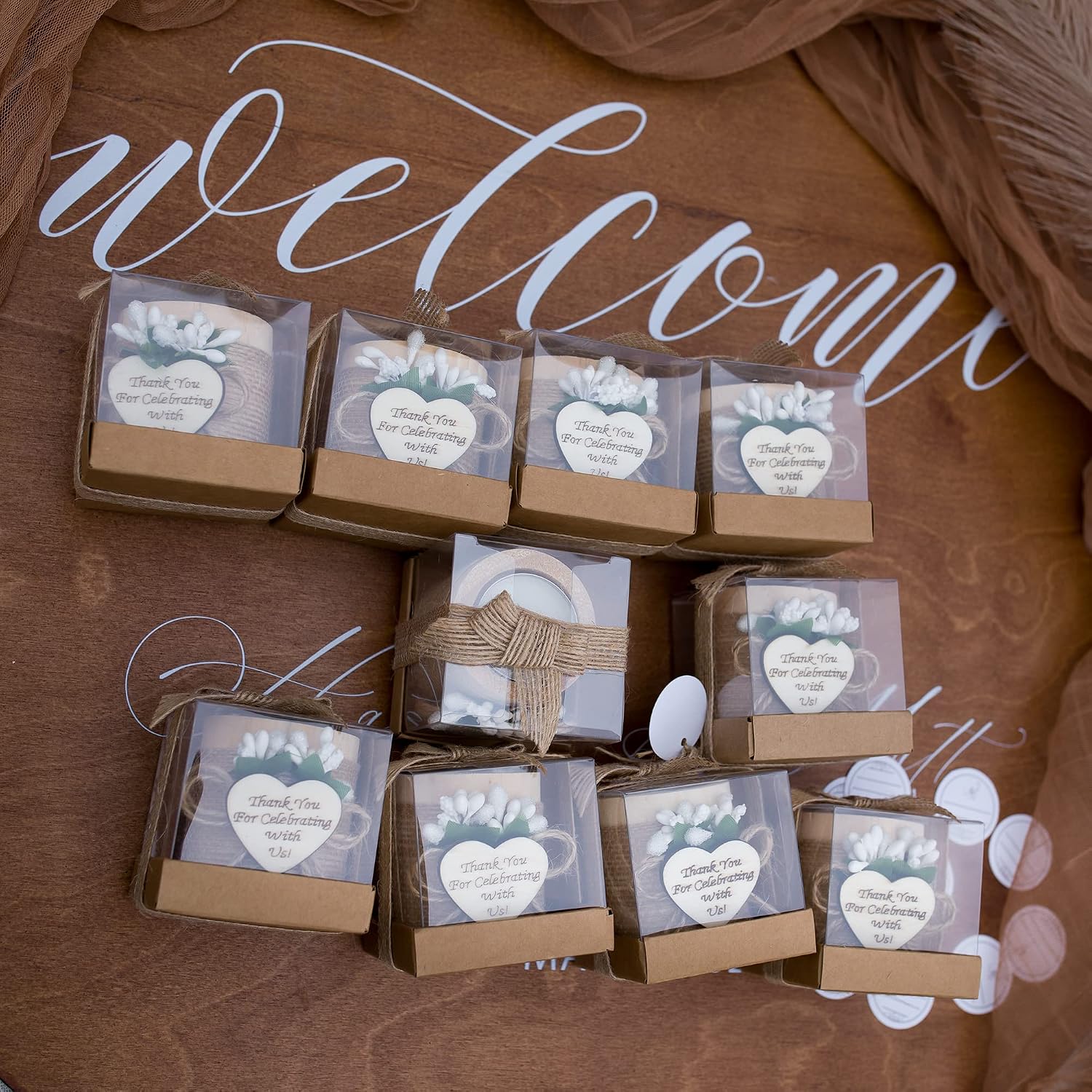
A wooden tealight holder is exactly what it sounds like: a small, usually palm-sized block or turned piece of wood with one or more shallow circular wells drilled into the top to hold a tealight candle (a short, wide candle in a thin metal or plastic cup, sold everywhere in bulk). As favors go, the category sits at a useful intersection — functional enough that guests don’t immediately toss it, small enough to ship or stack on a favor table without logistics drama, and tactile enough that a laser-engraved monogram or date reads as genuinely personal rather than slapped-on. The question isn’t whether wooden tealight holders work as favors. They do. The question practitioners are actually wrestling with in 2026 is which version to order, at what quantity, with which customization method, and from which supply tier — because those decisions determine whether this line item lands at $4.50 per guest or $28.00, and whether it disappears into a junk drawer or sits on a mantle for three years.
This guide is for the planner or couple who already knows they want to go this direction and needs a decision framework, not a mood board. We’ll cover wood species and format tradeoffs, the three main sourcing tiers, customization method comparisons, survivability signals from aggregated buyer reviews, and a clear if/then at the end.
| EDITOR'S PICK50 Piece Wooden Tealight Candle… | Mid-tier30 Pack Wedding Favors Wood Tea… | Budget pick10 Piece Set of Wooden Tealight… | |
|---|---|---|---|
| Piece count | 50 | 30 | 10 |
| Color/finish | — | — | Light brown |
| Design | — | Cylinder | Flowers |
| Suitable for | Wedding, Bridal, Baby | Bridal, Baptism, Baby | Wedding, Baby, Bridal |
| Price | $84.99 | $55.99 | $22.99 |
| See on Amazon → | See on Amazon → | See on Amazon → |
Wood Species and Format: The Decisions That Lock In Everything Else
Your choice of wood species and holder format isn’t just aesthetic — it drives unit cost, lead time, and how well engraving reads. Get these wrong and the customization tier you planned won’t look the way you expect.
Pine and basswood are the entry tier. They’re soft, inexpensive, and take laser engraving cleanly, but they show handling marks and oils from guests’ hands during a reception. Buyers on aggregated review platforms consistently note that unsealed pine holders look noticeably more worn after a single event night in a warm venue. If you’re going unsealed-rustic intentionally and the holders ship directly to guest homes rather than sitting out at a table all evening, this matters less.
Birch and maple are the mid-tier sweet spot. Both are hard enough to resist surface dings, light enough in color that a burnt-in laser engraving produces strong contrast, and widely available from domestic suppliers with reliable grain consistency. Style Me Pretty’s rustic wedding favor roundup notes that birch rounds (cross-section slices with the bark edge left on) have maintained search and Pinterest-save momentum for several consecutive seasons — the bark edge reads as “intentional rustic” rather than “unfinished.” Maple turns beautifully on a lathe and is the go-to for premium cylindrical or geometric formats.
Walnut is the luxury tier. The dark, variable grain makes laser engraving contrast-dependent on placement — test your file on scrap before committing to a full run. Walnut’s real advantage is perceived value: Apartment Therapy’s coverage of small decorative objects notes that dark hardwood pieces register as “kept, display-worthy décor” rather than “favor” in the minds of guests who design their spaces. If your event is in the $150-per-head range or above and you want the favor to read as a considered gift rather than a token, walnut is the argument.
Format breaks into three families:
- Slice/round (cross-cut log section, 1–3 tealight wells): the most widely sourced, easiest to stack and transport, works at every price tier
- Turned cylinder or geometric block: requires a woodworking vendor rather than a laser-cutting operation; MOQ (minimum order quantity) is typically higher and lead time is longer
- Tray or duo-holder (rectangular piece with two wells): scales up perceived value without dramatically increasing unit cost; reads more like a home object and less like a favor
The Three Sourcing Tiers: What You’re Actually Buying
Tier 1: Mass-Customization Platforms ($4–$10 per unit)
This is your Etsy-at-volume layer, plus dedicated wedding favor wholesalers. Vendors in this tier use CNC routers or laser cutters running high-volume jobs, with your personalization file queued in batch. Birch rounds with a single-line laser engraving (date, monogram, or short phrase) are the bread and butter.
What works here: Orders of 75–300 units where per-guest cost is a hard constraint. The Knot’s 2025 Real Weddings Study data indicates that the median spend on favors across all wedding budget tiers sits under $10 per guest — Tier 1 is where the majority of working budgets live.
Watch for: Grain inconsistency at volume (natural material, batch variation is real), engraving depth variance between pieces, and lead times that sellers quote optimistically. Standard production at this tier runs 10–18 business days; add 5–7 days buffer for any pre-peak-season order (April–June, October–November). Rush fees of 20–35% are common and not always disclosed upfront.
MOQ reality: Most mass-customization Etsy vendors have soft MOQs of 25–50 units but don’t apply volume pricing meaningfully until 100+. If your guest count is under 60, you may pay near-retail per unit even on a “bulk” order.
Tier 2: Independent Artisan / Small Studio ($12–$28 per unit)
This tier includes small woodworking studios on Etsy’s higher-price end, regional craft vendors, and specialty favor companies with in-house production. You’re paying for tighter quality control, more format variety, and the ability to have a conversation about your specific aesthetic.
What works here: Styled micro-weddings, events where the favor is part of the tablescape (the holder sits at each place setting with a named tag), and situations where a slightly imperfect mass-batch would be noticeable to your client. Brides.com’s coverage of favors guests actually keep consistently names “quality of material” as the top predictor of a favor surviving the post-event purge — artisan-tier wood quality and finish is the lever.
Watch for: Lead times extend significantly in this tier. Independent woodworkers doing turned or hand-finished pieces often quote 3–5 weeks and mean it; during peak booking seasons many close their queues. If you’re under 8 weeks to event date, have a confirmed backup vendor before you commit. Also verify whether the quoted price includes finishing (oiling, waxing, or lacquering) — unsealed artisan wood at $18 per unit is a different product than sealed artisan wood at $18 per unit.
Customization options expand here: Hand-stamping, wood-burned script (vs. laser-engraved), natural-edge live-edge formats, and dual-species inlay all become available from studios that work at this tier.
Tier 3: Bespoke / Luxury Gifting ($35–$90+ per unit)
This is the territory where the wooden tealight holder is packaged as part of a curated gift set — wrapped, ribboned, accompanied by a hand-lettered card, and potentially bundled with a complementary item (a small taper candle, a herb sachet, a seed packet). Vendors operating here include luxury favor studios, corporate gifting companies, and specialty makers whose work appears in publications like Town & Country and Vogue’s wedding coverage.
What works here: Events where per-guest favor budget is $50+, corporate VIP gifting programs, and hospitality welcome suite components. The wooden holder at this tier is rarely the lead SKU — it’s an anchoring object in a thoughtfully assembled package.
Watch for: Minimum order values (not just unit counts) that can run $1,500–$3,000 per engagement. Bespoke finishing and packaging add 4–6 weeks to lead time on top of production. Confirm whether customization includes individual guest name personalization or only event-level branding — many luxury vendors cap at one engraving variable per batch.
Customization Method Comparison: Laser vs. Burn vs. Stamp
By the numbers — three main methods:
| Method | Cost premium over blank | Depth/tactility | Best wood pairing |
|---|---|---|---|
| Laser engraving (CNC) | +$1–3/unit at volume | Low-moderate | Birch, maple, pine |
| Hand wood burning (pyrography) | +$5–15/unit | High, visible texture | Maple, walnut, cherry |
| Rubber stamp + ink | +$0.50–1/unit | Surface only, no depth | Any, unsealed only |
Laser engraving is the default for good reason: it’s consistent at volume, scales without per-unit labor cost increase, and holds fine detail (a script font, a small botanical illustration). Owners across aggregated reviews consistently report that laser-engraved birch reads as “intentional and clean” at the favor table.
Hand wood burning has a warmth that laser work doesn’t replicate — the slight irregularity is the point. Martha Stewart Weddings’ styling guides repeatedly reference pyrography as the technique that bridges rustic and heirloom aesthetics. The tradeoff is pure math: at 100 units, hand-burning at $10/unit added cost is $1,000 above laser. At 50 units for a micro-wedding, the same premium is $500 — and the per-piece result is meaningfully more distinctive.
Stamping is a budget extender for DIY-adjacent situations and doesn’t belong on a favor you’re positioning as a keepsake.
Survivability: Which Version Gets Kept
Apartment Therapy’s editorial coverage of small decorative objects notes a consistent pattern: wood pieces with a functional use (candle holders, small trays, bud vases) have a significantly longer domestic lifespan than purely decorative favors because they don’t require the recipient to decide where they belong — they have a job. A wooden tealight holder has an assigned role in a room before the guest even gets home.
The variables that determine whether ours specifically gets kept:
- Finish quality — A tacky or rough-edged piece gets quietly discarded. A smooth, sealed surface with no visible tool marks reads as considered.
- Scale — Oversized holders that dominate a shelf compete with existing décor and lose. A 3–4 inch diameter round or a slim rectangular piece fits most mantle and side-table contexts without requiring the guest to reorganize.
- Personalization legibility — A date or monogram in a clean, well-spaced font that reads at arm’s length is the version that prompts “oh, that was from Sarah and Marco’s wedding” two years later. Overly fussy scripts that require squinting don’t.
The Decision Framework
If your per-guest favor budget is under $8, Tier 1 birch rounds with laser engraving are the honest answer — execute them cleanly with a simple font and good packaging, and they hold up well.
If your per-guest budget is $12–$22 and you’re styling a cohesive tablescape, go Tier 2 artisan maple or walnut in a format that functions as a place card holder during the reception and a tealight holder afterward. That dual-function justification is your pitch to clients who push back on favor spend.
If your event is positioned at $150+ per guest or you’re sourcing for a corporate VIP welcome suite, the wooden holder earns its place only inside a curated package. Source at Tier 3, budget $50–$70 for the assembled set, and treat the holder as the tactile anchor of a story — not the whole story.
If your timeline is under 6 weeks, skip Tier 2 artisan turned formats entirely and source Tier 1 with a competent finishing upgrade (ask the vendor specifically about sanding grade and seal coat). A well-finished Tier 1 piece is a better outcome than a rushed Tier 2 piece with grain inconsistency and a missed ship date.
The tealight holder category earns its place precisely because it’s useful. Favor categories guests actually keep, per Brides.com’s ongoing reader surveys, are dominated by objects with a function in the home. Execute the basics — species, finish, legible personalization, appropriate scale — and this is a favor line item that holds its value long after the event date.